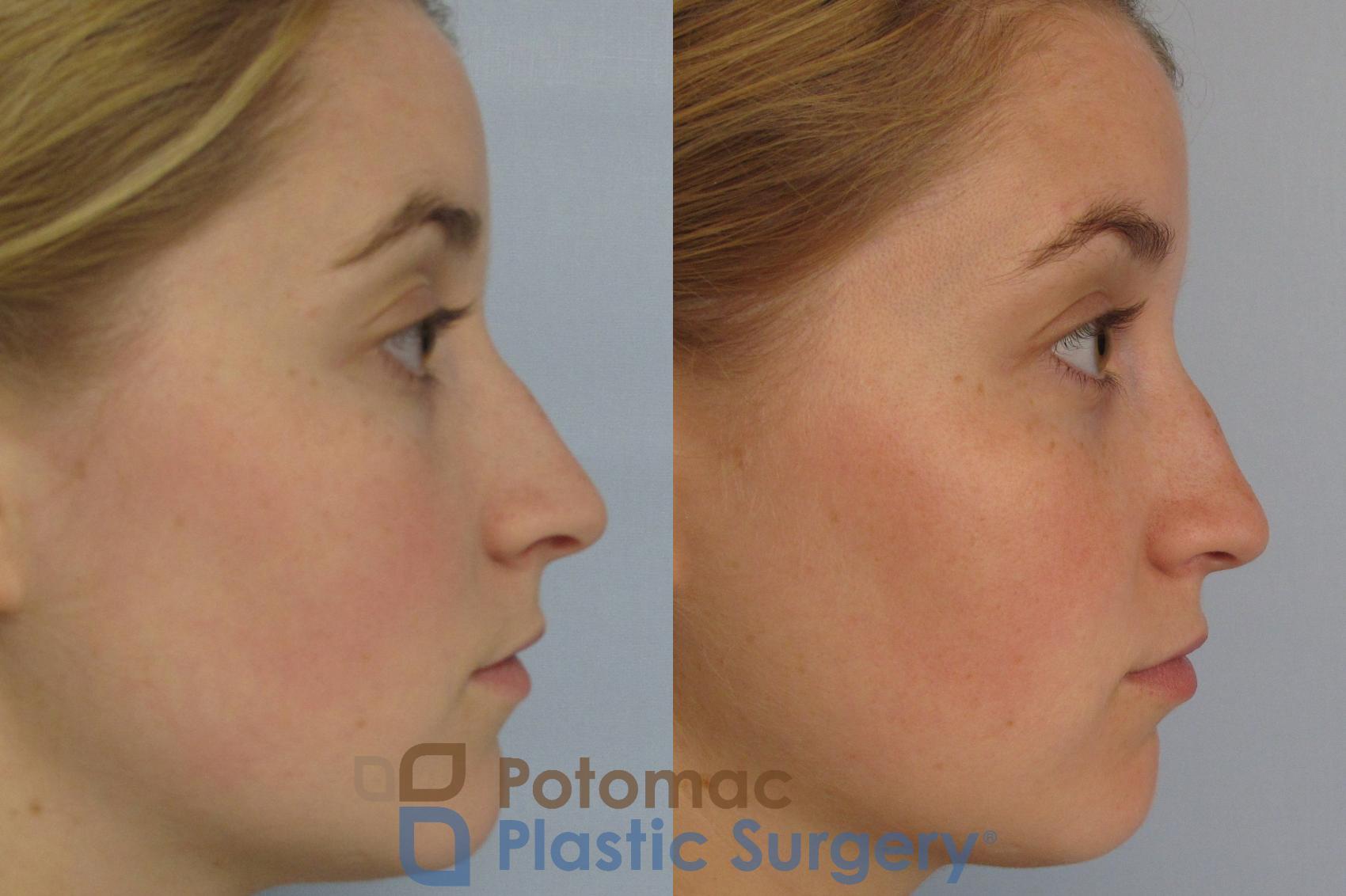
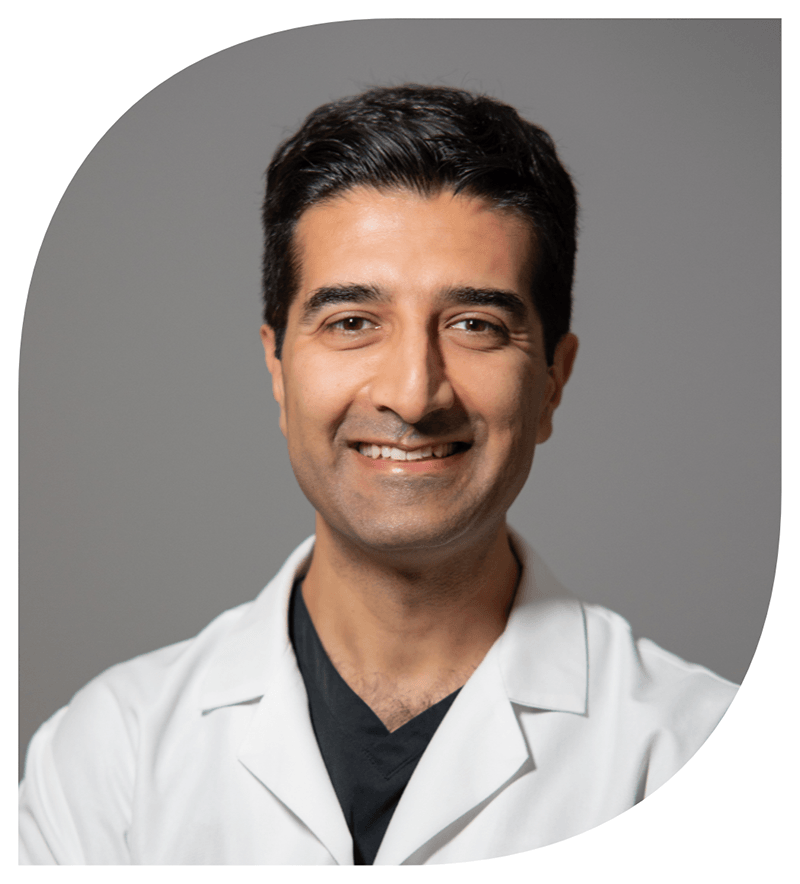
Nasal congestion and breathing difficulties are common complaints. While initial treatment may involve nasal sprays, allergy medications, or antihistamines, reconstructive nose surgery or rhinoplasty may be required to help people from Arlington and Ashburn, VA; Bethesda and Chevy Chase, MD; and surrounding cities treat chronic nasal obstruction and breathe more freely. A rhinoplasty specialist in Washington, DC, Dr. Houtan Chaboki is dual board-certified in both facial plastic surgery and otolaryngology, which makes him highly qualified in both cosmetic and reconstructive surgery of the nose. He works with top DC allergists, providing a surgical solution for nasal allergy patients. Evaluation by Dr. Chaboki can help determine what specific procedures would be required to adequately treat your nasal obstruction.
Reconstructive nose surgery or sinus surgery may not alter the shape of your nose or appearance, but may be performed with or without cosmetic rhinoplasty. Many rhinoplasty patients who visit Dr. Chaboki may consider ancillary procedures to enhance their appearance, such as chin augmentation or a neck lift, along with corrective nose surgery to make the most of their recovery time.
A deviated septum, a common factor in nasal congestion, is a problem for many Washingtonians. While a deviated septum is very common, a nasal injury or fracture can contribute to the bone and/or cartilage bending or twisting. Washington DC deviated septum patients may complain of symptoms such as allergies, nasal blockage, or congestion.<... Read More
Improving the profile is one of the most common requests for rhinoplasty. A bump is normally made of both bone and cartilage tissue. While most nasal bumps develop naturally, some bumps are from trauma or injury.This Washington DC area man had a prior sports injury, which contributed to his nasal bump and deviated septum. In addition,... Read More
Normally, the tip of the nose naturally moves a bit when one smiles. This Maryland woman had an excessive droopy tip of the nose when smiling. She underwent finesse rhinoplasty in Maryland to improve facial balance via an endonasal approach, without any external incisions. The tip of the nose is in a better position and does not droop anymore... Read More
A droopy tip is one of the most common reasons patients seek rhinoplasty, cosmetic surgery of the nose. The tip of the nose consists mostly of skin and cartilage. The shape, size, strength, and position of this nasal cartilage are primary factors contributing to the shape. Skin thickness also plays an important role, as patients with thicker... Read More
Nasal congestion, commonly from a deviated septum, is a problem for many Washingtonians. Washington DC area patients with a deviated septum may complain of symptoms such as preferential mouth-breathing, nasal blockage, or congestion. This DC area professional has had chronic nasal obstruction since a childhood nasal injury.... Read More
Straightening a crooked nose is considered very difficult by many rhinoplasty surgeons. First, everyone has some form of asymmetry of the nose and face. This chronic asymmetry is developmental and considered normal. Second, nasal cartilage and bone have memory and can shift or move following surgery. In addition, scarring&... Read More
Washington DC and Virginia area cosmetic rhinoplasty patients often request reduction of the nasal bump. The bump or hump of the nose is primarily made of skin, cartilage, and bone. The nasal septum contributes to the bump, and some patients have an overgrowth or deviation of the septum that makes the nose appear relatively larger.This... Read More
A man's nose generally is larger and wider, as compared to a woman's nose. Rhinoplasty in male patients conservatively reduces the size of the nose, as appropriate. However, sometimes a nose should be made larger, in order to appear more proportionate and natural.This patient wanted to improve his profile and refine the nasal tip.... Read More
Septoplasty is a minor surgery to treat a deviated septum. It is an outpatient procedure and does not use an external cast. Dr. Chaboki uses a closed approach to the nose to avoid external incisions. Blocked cartilage and bone are reduced to open the nasal airway and help straighten the septum. Septoplasty is often combined with turbinate reduction to maximize the breathing passages.
What Is a Deviated Septum?
The nasal septum is the sheet of cartilage and bone that divides the nose into right and left chambers. A deviated septum is a condition where the septum is shifted away from the midline, crooked, bent, or twisted. Septal deviation is very common, with approximately 80% of people have a deviated septum to some degree. Dr. Chaboki, a deviated septum specialist, can determine if you are suffering from a deviated septum during your office consultation.
Nasal obstruction, nasal congestion, difficulty breathing through the nose, and snoring are the most common symptoms of a deviated septum. Nasal obstruction may be worse on one side, or alternate sides. Symptoms may occur all day or primarily at night. Some patients may also have repeated sinus infections or post-nasal drip due to blocked sinus drainage from a deviated septum. A deviated septum may be present at birth, caused by an injury, or can result from damage from previous treatments or surgery.
What Is Septorhinoplasty?
Septorhinoplasty involves nasal bone reshaping, in addition to cartilage and bone removal, to adequately treat the deviated septum. Septorhinoplasty is an outpatient procedure and involves an external cast for about one week. Dr. Chaboki performs septorhinoplasty via the preservation approach, an advanced method of surgery to treat the nose.
The nasal septum is the foundation of the nose, and major deviations of the septum result in a deviated nose and nasal asymmetry. Patients with a significantly deviated septum or crooked nose often require a septorhinoplasty to improve the nasal airway obstruction.
What Is Nasal Valve Repair?
Nasal valve repair is surgery to improve the nose structurally via cartilage grafts to help open the nasal passages and/or to help prevent the collapse of the nose. Procedures on the nasal valve are often combined with septoplasty, functional rhinoplasty, or septorhinoplasty.
The collapse of the nasal valve or nostrils is is an important cause of nasal airway obstruction. The nasal valve is the narrowest portion of the nasal passages where most blockages occur. The nasal valve is made of the nasal septum, inferior turbinate, and lower two-thirds of the nose. Weakening of the valve will make the nose be pinched or collapse on inspiration, both of which contribute to nasal congestion.
What Is Turbinate Reduction?
Turbinates are normal structures in the nasal passages that may swell due to their highly vascular tissue and mucous membrane outer lining. Dr. Chaboki may recommend shrinking the nasal turbinates via a minimally invasive technique, as an outpatient procedure with or without septoplasty. After turbinate reduction surgery, patients may have improved nasal breathing and reduced postnasal drip.
The largest turbinate, the inferior turbinate, is the primary contributor to nasal and allergy symptoms. In patients with hay fever (allergic rhinitis), the nasal turbinate remains persistently enlarged and obstructs the airway, causing a congested feeling. However, in some people, the inferior turbinate will remain enlarged despite medical therapy, even if the underlying problem is corrected. The most common symptoms from large turbinates are nasal congestion, nasal obstruction, difficulty breathing through the nose, postnasal drip, and snoring.
Houtan Chaboki, MD
Double Board-Certified Facial Plastic Surgeon
Certified by both the American Board of Otolaryngology and the American Board of Facial Plastic and Reconstructive Surgery, Dr. Chaboki has extensive knowledge of the intricacies of the face and neck. When you choose him for your procedure, you’re choosing one of the most reputable facial plastic surgeons in DC, as well as a nationwide leader in
preservation rhinoplasty.
Can a Broken Nose Be Repaired With Rhinoplasty Surgery?
It is important to be evaluated by a facial plastic surgeon soon after injury because there is a window of opportunity when a broken nose can be ideally treated with surgery. In Washington, DC, Dr. Chaboki performs reconstructive rhinoplasty to treat both acute nasal fractures and old nasal injuries to restore nasal form and function.
The nose projects from the face, making it vulnerable to injury. As a result, it’s not surprising that the nose is frequently broken. Once the immediate bruising and swelling subside, a broken nose or nasal fracture may significantly change your facial appearance. Nasal injuries can also increase nasal obstruction, nasal congestion, and snoring and may cause or worsen a deviated septum.
How Is Endoscopic Sinus Surgery Performed?
Dr. Chaboki specializes in minimally invasive, functional endoscopic sinus surgery (FESS) to open the sinuses and to improve the drainage. Balloon sinus surgery is the newest technique.
Chronic sinusitis, nasal polyps, and allergies affect many patients. Typical nasal sinus symptoms may include congestion, nasal obstruction, post-nasal drip, facial pain and pressure, decreased taste and smell, tooth pain, or fatigue due to chronic inflammation. Some patients suffer from recurrent infections and require frequent antibiotics. After sinus surgery in Washington, DC, patients may breathe better and experience fewer and less severe sinus problems.
Is There a Non Surgical Alternative to Medical Rhinoplasty?
Radiofrequency (RF) is a relatively new office treatment that creates controlled heat to target tissue inside the nose to treat nasal obstruction. The tissue is not removed or cut with RF, rather tissue volume at the target site shrinks. RF has been used on the inferior turbinate for years and now available to treat other areas inside the nose, such as the nasal valve. A small difference in space inside the nose can dramatically improve nasal airflow.
Dr. Chaboki uses RF technology in patients with nasal obstruction who are not surgical candidates. RF may still be appropriate for those referred to Dr. Chaboki who had prior nasal and sinus surgery, or rhinoplasty, and still have symptomatic nasal obstruction.
The office RF procedure takes a few minutes and is performed while the patient is awake using local anesthesia. Packing and sutures are not used. There aren’t external casts or splints either. The patient can return to work the same day as desired. Most patients require just one treatment for long-lasting results.
Medical Rhinoplasty FAQs
How long will swelling and bruising last?
Swelling and bruising occur both on the outside and inside of the nose. It is normal to feel congested and have nasal obstruction and post-nasal drip immediately after nasal injuries. Most Washington, DC rhinoplasty patients and patients with a traumatic nose injury report that swelling resolves within a month. The final 20% of swelling takes a much longer time to resolve, up to a year or longer. Fortunately, this final swelling is usually only evident to Dr. Chaboki.
In addition to carefully following your surgeon’s guidelines, there are several things you can do to help reduce nasal swelling:
Keep your head elevated
Maintain the nasal splint / cast
Apply ice to the cheeks, forehead, and nose
Use Arnica Montana
Avoid resting anything on the nose, including glasses and sunglasses
Avoid blowing the nose or sneezing
How is a broken nose or nasal fracture treated?
Minor nasal injuries and fractures may not require surgical intervention. If your nose appears as it did before the injury, you may need no treatment other than rest and observation.
Broken bones of the nose normally require surgical intervention for repositioning and reshaping. Dr. Chaboki treats most broken noses in the office with local anesthesia. The procedure is very quick and simple and patients may return home afterward. He will place a cast over the nose made of tape and plastic. This nasal cast will then stay in place for a week.
For more severe injuries (or if the patient prefers), Dr. Chaboki will treat broken nasal bones in the operating room with general anesthesia or IV sedation (twilight anesthesia).
How will Dr. Chaboki determine if I have a broken nose?
Dr. Chaboki will perform a comprehensive evaluation of the nose and face. You will be asked to explain how the injury occurred and how your nose looked before the injury (photographs taken before your injury may be helpful). He will ask about your general health and other medical problems. Dr. Chaboki will examine the external and internal nose, septum, cartilage, bone, and mucous membranes.
Usually an x-ray or computed tomography (CT) scan has already been performed prior to seeing Dr. Chaboki. Please bring all radiology images to the office, as Dr. Chaboki needs to see the actual pictures from the CT scan.
When should I see a facial specialist for a broken nose?
Depending upon the nature of the trauma and extent of the injury, an initial evaluation is normally performed at an emergency room. It is important to check for a septal hematoma (blood collecting around the nasal septum) and assess associated facial injuries. Septal hematomas are special emergencies, which must be treated promptly to prevent worse nasal problems from developing.
If you suspect a nasal fracture, you must be evaluated by a facial plastic surgeon within one week of the injury. Your broken nose may be repaired within one to two weeks from the day of injury. If you wait too long before plastic surgery evaluation, you will most likely need to wait several months before nose surgery in Washington, DC.
Patients with untreated broken noses have an undesirable appearance, as well as permanent difficulty in nasal breathing and congestion. Lastly, patients have associated cuts, bruises, lacerations, abrasions, and skin injuries which need plastic surgery evaluation to help prevent scarring and disfigurement.
What is a nasal fracture?
Broken noses typically refer to fractures of the nasal bones; however, the cartilage of the nose and nasal septum may be injured as well. Nasal trauma usually occurs from sports, motor vehicle accidents, falls or fights. Sadly, nasal injuries may also be the result of domestic violence. Dr. Chaboki performs pro-bono work for FACE TO FACE: the National Domestic Violence project, and has frequently treated these types of injuries through his work there.
A broken nose may result in a small crack of the bones without any change in appearance. However, a broken nose is usually obvious due to a variety of symptoms and signs, including:
The nose appears to be deviated, crooked, or twisted.
There is bruising and swelling both inside and outside of the nose.
You may experience tenderness, especially at the bridge of the nose.
Black eyes (dark bruises around the eyes) may be present.
Skin appears to be swollen.
There may be visible abrasions, lacerations, or cuts.
There may be some nasal congestion.
A nose bleed can also occur as a result of a broken nose.
Can septoplasty or functional nasal surgery be combined with cosmetic rhinoplasty?
Yes. Combining septoplasty with rhinoplasty near Maryland is beneficial for several reasons. First, by combining surgery, insurance may cover a portion of the procedure, and you may save money on fees. Secondly, cartilage modified from the nasal septum during the septoplasty may be used for grafts during the rhinoplasty. Dr. Chaboki may need to obtain cartilage from your ear or rib for grafts, if you have already had deviated septum surgery, since cartilage from the septum would not be available. Lastly, you will need only one recovery period following surgery, because you minimize downtime by avoiding two separate procedures.
How are large turbinates reduced with turbinate surgery?
Turbinate surgery is designed to reduce its size, primarily of enlarged inferior turbinates. Turbinoplasty is another name for surgery on the nasal turbinates. Turbinate surgery is usually combined with septoplasty, sinus surgery, or rhinoplasty. The inferior turbinate can be reduced in several ways:
Directly cutting a portion off
Removing the inside portion
Pushing the turbinate outward
Combination of the above
Surgery on the turbinates is done with specialized equipment and endoscopic cameras. All methods of turbinate surgery are performed entirely through the nostrils, without external incisions. Occasionally, turbinate tissue will re-grow or re-swell after turbinate surgery, and the procedure may need to be repeated. Dr. Chaboki has extensive experience in these various methods of turbinate surgery.
What is revision septoplasty?
Some patients may have persistent nasal and sinus symptoms after deviated septum surgery. There are numerous reasons for this problem, including untreated allergies, regrowth or re-swelling turbinates, recurrent polyps, chronic infection, and trauma. Sometimes the nasal septum moves back, becoming crooked again, or insufficient cartilage and bone was removed from the initial procedure. Dr. Chaboki has specialized training in the anatomy, physiology, and cosmetic aspect of the nose. His expertise in both the internal and external nose will help treat your sinus nasal symptoms of allergy, nasal obstruction, snoring, nasal congestion, sinusitis, and post-nasal drip. He performs minimally invasive rhinoplasty, functional rhinoplasty, revision rhinoplasty, septoplasty, deviated septum surgery, turbinate reduction, and endoscopic sinus surgery.
How does septoplasty correct a deviated septum?
Septoplasty is reconstructive plastic surgery performed to correct the nasal septum. Septoplasty is performed entirely through the nostrils, without external incisions. During the procedure, deviated portions of bone and cartilage may be removed entirely, or they may be readjusted and repositioned. The procedure has different techniques and approaches, largely dependent on the anatomy of the nasal septum for each particular person. Dr. Chaboki has extensive experience with all methods of deviated septum surgery, including the following:
Submucous resection
Swinging door / Goldman septoplasty
Linear septoplasty
Longitudinal septoplasty
Fan septoplasty
Endoscopic septoplasty
Revision septoplasty
Deviated septum surgery may be combined with rhinoplasty, turbinate reduction, and/or endoscopic sinus surgery. For a majority of patients, septoplasty surgery does not alter the external shape of the nose, since the deviated portions of cartilage and bone are internal. Rhinoplasty (plastic surgery to reshape the nose), when performed along with a septoplasty, is often called functional rhinoplasty or septorhinoplasty. These methods of rhinoplasty are performed primarily to restore nasal function, such as breathing and airflow.
What are the treatment options for a deviated septum?
Various treatment options are available for patients with deviated septums. Recommended treatment will depend on the severity of symptoms, degree of septal deviation, prior treatments, and your medical history. Options include:
Medication
Nasal strips
Alternative therapy
Surgery
Combination of the above
Medication is used when nasal symptoms are minor (intermittent stuffy nose, minor snoring). Initial treatment usually consists of antihistamines, nasal decongestants, and steroid containing nasal sprays. Nasal strips are small, bandage-like tapes have small plastic springs and are worn over the bridge of the nose. While the strips have no effect on the septum, they serve to spread the nostrils so that breathing through the nose is easier. While alternative therapies may not cure the problem, they do address the symptoms. Saline drops and sprays are very helpful in loosening mucus, removing pollen, and moisturizing the nose. A more effective treatment is nasal lavage, often done using a small pot with a spout. Saline solution is poured into one nostril and allowed to flow out the other nostril.
What is the difference between allergies and deviated septum?
More than 150 million people suffer from allergies in the United States. Environmental allergens, such as pollen and mold, are especially worse in northern Virginia, Maryland, and downtown DC. Allergic symptoms are sometimes indistinguishable from a deviated septum. Patients may suffer from nasal congestion, snoring, post-nasal drip, runny nose, fatigue and tiredness, and facial pressure from either condition. Nasal allergies cause the mucous membranes of the nose and sinus cavity to swell up and create more mucous. A deviated septum is a structural condition of the nasal cartilage and bone. Both a deviated septum and allergies may occur at the same time. Only through complete testing can one differentiate the cause of symptoms for a particular patient.
Many patients think they may have an allergy to dust, pollen, mold, trees, or pets, but their nasal symptoms are primarily due to a deviated septum and/or large turbinates. Allergy patients may be treated with immunotherapy (allergy shots), in addition to antihistamines and allergy medication. These allergy shots are a series of injections that patients with allergies may choose in order to improve their health by reducing allergic symptoms and reducing the need for allergy medication. Allergy shots are specific for each particular patient, with injections performed in the office under medical supervision. While Dr. Chaboki, a facial plastic surgeon, does not treat allergies with shots directly, he works closely with many metropolitan Washington DC, northern Virginia, and Maryland allergists.
What causes nasal obstruction and difficulty breathing?
The sensation of nasal congestion may be due to a variety of conditions. A deviated septum is the most common cause of nasal obstruction. Enlarged turbinates is the second most common cause of breathing difficulty, and usually associated with a deviated septum. Other structural problems with the nose, such as small nostrils, weak nostrils, scarring, and a narrow or collapsed nasal valve, may also contribute to nasal obstruction. Many other conditions, such as medication side effects, allergies, irritants, chronic sinusitis, and systemic illnesses, can contribute to nasal breathing problems. The metropolitan Washington, DC area is especially problematic for people with allergies to pollen. These conditions can be treated with medicine and may not require surgery. As a rhinoplasty surgeon with extensive training in nasal surgery, Dr. Chaboki is able to identify and correct such problems. His comprehensive approach enables him to address all of the issues contributing to nasal obstruction.
How is a deviated septum diagnosed?
Determining if a patient has a deviated septum is straightforward when diagnosed by a specialist such as Dr. Chaboki. After discussing your symptoms and medical history, he performs a physical exam of the external and internal nose, cartilage, bone, and mucous membranes. This exam involves a bright light and a nasal speculum (an instrument that gently spreads open your nostrils) and an endoscope (high resolution video camera) to inspect the inside surface of each nostril. An anesthetic nasal spray is used prior to the endoscopic exam to reduce the minimal pressure during examination. Additional testing may be required in some circumstances, such as a CT scan. CT imaging combines special x-ray equipment with sophisticated computers to produce multiple pictures of the internal nose.
Does a deviated septum affect the appearance of the nose?
The nasal septum is the foundation of the nose and contributes to its appearance. Deviated septums are very common. However, most patients are not aware of having a deviated septum, as their external nose is symmetric. A deviated septum may present itself on the external nose as a big or large nose, crooked or twisted nose, an over-projected nasal tip, a rounded nasal tip, or a hump.
What are the nasal turbinates?
Turbinates are normal structures in the nasal passages. There is an inferior, middle, and superior turbinate on each side of the nose. The turbinates are highly vascular tissue, consisting of bone, spongy erectile tissue, and mucous membrane outer lining. The turbinates, along with the septum and nose, humidify, warm, and clean the air we breathe. These structures also contribute to smell. The inferior turbinate is a largest turbinate, and the primary contributor to nasal and allergy symptoms. This turbinate, about the size of your finger, runs the length of the nasal airway. The inferior turbinate can change size dramatically. Temperature changes, lying down, infection, allergies, hormones, emotions, and dust all may increase the size of the turbinate.
Large turbinates, alternatively known as hypertrophied turbinates, contribute to nasal symptoms. In some patients, the nasal turbinate remains persistently enlarged and obstructs the airway, resulting in a congested feeling. Usually, when the underlying problem is treated, such as allergy or infection, the turbinate will shrink back to its normal size. However, in some people, the inferior turbinate will remain swollen and enlarged, even if the underlying problem is corrected. The most common symptom from large turbinates is nasal congestion, nasal obstruction, difficulty breathing through the nose, and snoring. The symptoms may be worse on one side, or alternate sides. Symptoms may appear during the day or may appear primarily at night. In some patients, the drainage of the sinuses is inhibited, resulting in repeated sinus infections or post-nasal drip.
What is the nasal valve?
The lower two-thirds of the nose is made of skin and cartilage, while the upper third is the nasal bones. One can consider the external nose, or what is visible, as the roof of a house. The nasal septum would then be considered both the cantilever and buttress of the nose to support the roof. The junction of the septum and nasal cartilage is called the “valve.” The valve is the narrowest portion of the nose, where a majority of nasal blockage occurs. A deviated septum and enlarged turbinates are the most common causes of narrowed valve, but blockage may also occur from scar tissue, weak cartilage, or collapsed nose. Patients who have narrow nostrils or nose or pinched noses typically have a narrow nasal valve.
Treatment is primarily surgery via cartilage grafts to help open the nasal passages and/or to help prevent collapse of the nose. Procedures on the nasal valve are sometimes called functional rhinoplasty or septorhinoplasty.
Can I combine nose surgery & nasal repair with other facial surgery?
Yes, it’s generally preferred to combine procedures. First, by combining surgery, insurance may cover a portion of the procedure, and you may save money on fees. Secondly, tissue modified from one area may be used for another surgical area, such as fat transfer and face lifting. Lastly, you only need one recovery period following surgery, which means you minimize downtime by avoiding two separate procedures. Commonly combined procedures with nose surgery & nasal repair include the following:
The nasal sinuses are air spaces surrounded by bone and lined with a mucous membrane. The sinuses create mucous which drains through small passages into the nasal cavity. Endoscopic sinus surgery is a minimally invasive procedure, where a small camera is placed in the nose to open the sinuses by making these small drainage pathways larger and wider. Dr. Chaboki removes polyps, thick mucus, and chronic infection. Endoscopic sinus surgery may involve only one sinus chamber or more. It may also be combined with septoplasty, turbinate reduction, or other nasal surgery. By opening the natural drainage passages, endoscopic sinus surgery may help alleviate sinus symptoms in appropriate patients.
To discuss your goals for facial plastic surgery and the areas that you would like to improve, request a consultation with Dr. Chaboki online or call his office at
(202) 800-2085. Women and men visit him for complex rhinoplasty procedures from Arlington, VA; Silver Spring, MD; and throughout the Washington, DC, metro area.
A Reputation Built on Results
I previously had a thread lift, Ultherapy, and microneedling with decent results, but the lower face...
I Had an Amazing Experience
My initial visit and follow-up appointments were excellent. Dr Chaboki was...
Lives Up to Look Better Not Difference, Amazing Experience
I came to Dr. Chaboki to discuss undereye...
My surgery experience was truly the best and I honestly could not be more thankful and appreciative....