Cosmetic rhinoplasty, sometimes called a nose job, reshapes the nose to improve its size, shape, or proportions, and to enhance balance with the other facial features. Because even subtle changes to the nose can affect the face as a whole, each procedure requires a highly individualized approach.
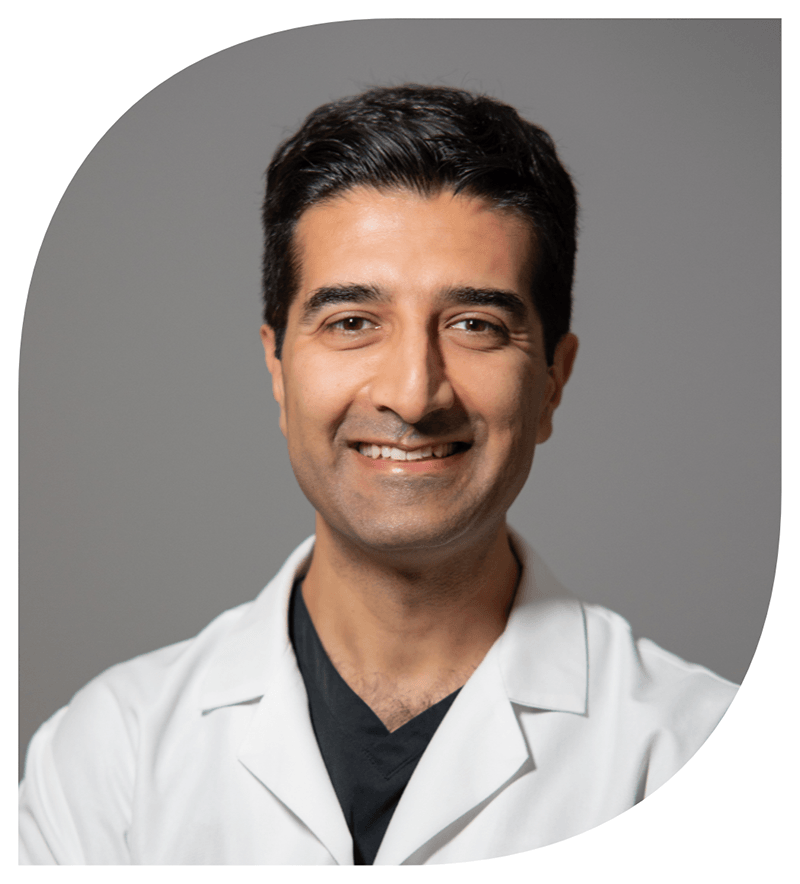
Double board-certified facial plastic surgeon Dr. Houtan Chaboki specializes in closed and preservation rhinoplasty. His understanding of both nasal aesthetics and function helps him achieve results that enhance facial harmony while preserving or improving nasal function, when needed.
Communities We Serve
Dr. Chaboki’s expertise in cosmetic rhinoplasty, including revision and preservation rhinoplasty, attracts people from throughout the Washington, DC, metro area, including:
Maryland cities, such as Bethesda, Chevy Chase, and Silver Spring
Northern Virginia communities, including Arlington and Ashburn
Rhinoplasty modifies nasal bone and cartilage to help take attention away from the nose. Many rhinoplasty patients report disliking the appearance of a bump or hump, especially on side view. Rhinoplasty reduces the bump to help the nose be better balanced with the face.This Washington DC rhinoplasty patient complained of a "large"... Read More
Early results after closed, preservation rhinoplasty.Plastic surgeons perform rhinoplasty via a variety of techniques, but usually by making an incision between the nostrils and leaving a scar. This rhinoplasty approach is referred to as open rhinoplasty, since the entire nose is opened. Dr. Chaboki prefers to avoid an external scar wh... Read More
Many men come to our office seeking rhinoplasty. Most have a bump or breathing issues, possibly from prior injury. This Washington DC rhinoplasty patient came to Potomac Plastic Surgery to review potential rhinoplasty options. He had chronic nasal congestion despite prior septoplasty by another surgeon. Examination revealed a dors... Read More
Patients considering rhinoplasty in the Washington DC area often ask plastic surgeons to reduce a nasal bump, which is made of both cartilage and bone, to improve their profile. This professional woman had considered rhinoplasty for years before a consultation with Dr. Chaboki, a board certified facial plastic surgeon. Via... Read More
Refine the nose with Rhinoplasty!Unlock the potential of your profile with rhinoplasty – a transformative journey to refine both aesthetics and function. Rhinoplasty goes beyond just changing the bridge and tip; it's about sculpting confidence and harmony in every angle.This vibrant woman from Virginia sought to improve her nose... Read More
Rhinoplasty is tailored to the specific needs of each patient. Some patients have cosmetic concerns of the nasal tip, while others may have issues with the bridge. One angle of the nose may be acceptable, while another angle may be disliked.This patient was referred to Dr. Chaboki to review rhinoplasty options. She had a deviated septu... Read More
Rhinoplasty patients may ask their close friends or family for recommendations for a plastic surgeon. Beyond the online reviews, these personal recommendations can help build trust between the patient and surgeon. While Dr. Chaboki sees many patients who were referred from their own online research, cosmetic surgery patients are oft... Read More
Nose reshaping surgery (rhinoplasty) can treat all aspects of the nose, outside and inside. Those Washington DC allergy patients who have surgery often want to improve both nasal congestion from a deviated septum and improve the appearance of the nose at the same time. One benefit of combination nasal surgery, septoplasty with... Read More
Rhinoplasty, also called nose surgery, is a facial plastic surgery procedure that improves the appearance of the nose. Medical rhinoplasty, also called functional rhinoplasty, can be combined with cosmetic rhinoplasty to improve the patient’s ability to breathe.
How Much Does Rhinoplasty Cost in the Washington, DC, Metro?
The cost of rhinoplasty surgery is based on the nature of your procedure and many other factors, such as operating room costs. Every patient is different, and there’s no way to offer a concrete estimate without an in‐person consultation. A member of our staff will provide you with a written quote that reflects your specific procedure discussed with Dr. Chaboki. You can learn more about the costs associated with plastic surgery on our Fees & Financing page.
What Are the Benefits of a Closed Rhinoplasty?
Closed rhinoplasty is known as endonasal (inside the nose) rhinoplasty. Many people consider this method of rhinoplasty as incisionless as Dr. Chaboki hides incisions inside the nose. Closed rhinoplasty offers patients several advantages:
Avoids external scars
Reduces rhinoplasty swelling
Reduces numbness of the nose
Dr. Chaboki performs a variety of rhinoplasty procedures but specializes in and teaches other surgeons the closed rhinoplasty technique. Each patient is unique and requires a customized treatment plan, and closed scarless rhinoplasty can be used on a wide variety of patients, from the most simple to the most complex revision surgery.
One of Dr. Chaboki’s Many Happy Rhinoplasty Patients
Is a Closed or Open Rhinoplasty Right for Me?
Dr. Chaboki offers his patients who visit him from areas like Northern Virginia and Maryland both open rhinoplasty and incisionless rhinoplasty procedures and will help determine the most appropriate method for you. Rhinoplasty, even when performed for cosmetic reasons, should avoid decreasing nasal function. It would be inappropriate to get a cosmetically improved nose if you are unable to breathe through it. For this reason, it’s important to choose a surgeon with an artistic eye and sound medical experience.
What Is Preservation Rhinoplasty?
Preservation rhinoplasty is an advanced surgical technique that reshapes the nose while maintaining as much of its natural framework as possible. Dr. Chaboki typically performs preservation rhinoplasty using a closed approach, placing the surgical incisions inside the nose.
“Most surgeons remove the dorsal framework when reducing a hump, which can contribute to irregularities. With preservation rhinoplasty, I reshape and reposition the existing structure rather than taking it away. The nose heals more naturally, with smoother results.” –Dr. Chaboki
Closed preservation rhinoplasty has a significant learning curve and is performed by a relatively limited number of surgeons. Dr. Chaboki is one of a few select rhinoplasty specialists in the United States who perform this type of nasal surgery, and fellow surgeons have asked to observe him as he performs it.
Rhinoplasty Recovery
Healing after rhinoplasty surgery involves both short-term recovery and a longer period during which residual swelling gradually goes down. Initially, you can expect visible swelling and bruising to last about 2 weeks. Most patients return to work or school a week after the procedure. The feeling of a stuffy nose is another part of the recovery, although most patients don’t experience much discomfort. Patients use saline spray and antibiotic ointment inside the nose to promote healing and relieve these symptoms.
You can accelerate the healing process in the first week by applying cold compresses on the cheeks (not directly on the nose), keeping your head elevated while sleeping, and not blowing your nose.
Here’s a typical rhinoplasty recovery timeline:
First week: A majority of healing occurs during the first week after surgery. Dr. Chaboki removes the external cast after a week.
2 weeks: Swelling and bruising should have diminished enough to feel comfortable going to a restaurant or other social gathering.
3 months: You’ll have a good idea of the new shape and size of the nose. Most swelling in the upper third will have resolved.
6 months: Almost all of the swelling resolves by this point, with the tip remaining a bit swollen.
1 to 3 years: You’ll see the final shape and size of your nose.
You can resume exercise about 2 to 4 weeks after the procedure, but avoid contact sports for at least 3 to 4 months.
What Is Revision Rhinoplasty?
Revision rhinoplasty refines a prior surgery to address cosmetic concerns, breathing difficulties, or unsatisfactory results. Even when the initial surgery is performed well, the nose’s complex internal and external anatomy and the unpredictability of healing can lead to visible irregularities or functional concerns.
Approximately 20% of Dr. Chaboki’s rhinoplasty consultations are for revision surgery; these procedures account for roughly 10% of his rhinoplasty cases. Patients come to his for second opinions and possible corrective surgery after rhinoplasty performed elsewhere. Because prior surgery can alter nasal structure and lead to scar tissue, Dr. Chaboki carefully evaluates both the appearance and function of the nose before recommending another procedure. He may use a closed approach, depending on the patient’s anatomy and surgical history.
Houtan Chaboki, MD
Double Board-Certified Facial Plastic Surgeon
Certified by both the American Board of Otolaryngology and the American Board of Facial Plastic and Reconstructive Surgery, Dr. Chaboki has extensive knowledge of the intricacies of the face and neck. When you choose him for your procedure, you’re choosing one of the most reputable facial plastic surgeons in DC, as well as a nationwide leader in
preservation rhinoplasty.
Rhinoplasty, when performed along with a nasal and sinus surgery to improve breathing, may be referred to as functional rhinoplasty or reconstructive nasal surgery. As a facial plastic surgeon in Washington, DC, Dr. Chaboki performs functional rhinoplasty to enhance nasal function with improved airflow. He has specialized training in the anatomy, physiology, and cosmetic aspect of the nose and sinuses. His expertise in both the internal and external nose can help improve both the appearance and function of the nose at the same time.
Can Rhinoplasty Be Combined With Other Procedures?
Yes, Dr. Chaboki often combines rhinoplasty with other cosmetic procedures of the face, surgical or non surgical, for enhanced results. Popular options include:
Eyelid surgery to reduce sagging eyelid skin and pockets of fat.
Neck lift to tighten lax, crepey skin and pronounced vertical neckbands.
BOTOX® Cosmetic to smooth away lines and creases around the eyes, between the eyebrows, and across the forehead.
Dermal fillers to fill in tear troughs and dark circles under the eyes.
We want you to look and feel your best, so we’ll discuss your cosmetic options with you during your initial consultation.
Are There Non Surgical Alternatives to Cosmetic Rhinoplasty?
Non surgical rhinoplasty, also referred to as liquid rhinoplasty, is a quick procedure performed in the office via awake, local anesthesia and requires little to no downtime. Dermal fillers are soft gels that are injected into the nose to temporarily change the shape of your nose without surgery. Dr. Chaboki is a facial plastic surgery specialist who understands how combining facial filler and BOTOX injections can reshape the nose using only local anesthesia. For example, injections made in precise locations can camouflage a bump without surgery.
Patients considering a nose job for the first time or those seeking revision rhinoplasty may possibly benefit from non surgical rhinoplasty. Some patients may also “test drive” a new nose with non surgical rhinoplasty prior to surgery. However, non surgical rhinoplasty is not a replacement for surgery, and permanent results still require surgery.
Before and After Liquid Rhinoplasty
This patient wanted to reduce the hump on his nose without surgery.
Before and After Cosmetic Rhinoplasty
This patient had surgical rhinoplasty to correct the bump on her nose.
While rhinoplasty is a commonly performed facial plastic surgery procedure, it is highly complex and requires a surgeon who has extensive training and experience for optimal safety and results. As a board-certified otolaryngologist and a board-certified facial plastic surgeon, Dr. Chaboki has the credentials needed to give patients the results they desire with both cosmetic and functional rhinoplasty.
How painful is rhinoplasty?
Dr. Chaboki performs cosmetic nasal surgery with the patient under a general anesthetic, so you’ll be asleep during the procedure. You may experience some discomfort during the initial recovery period, but most rhinoplasty patients are able to manage their pain with over-the-counter medication.
Are rhinoplasty results permanent?
Yes, rhinoplasty results last indefinitely—if there is no trauma to the nose. The aging process will continue, but it typically doesn’t have a noticeable impact on the nose.
What’s the best age for a nose job?
In general, rhinoplasty patients should be between ages 18 and 40 to attain optimal results. It’s important for young patients to have a fully developed facial structure. Patients over 40 tend to heal slower than younger patients; however, there is no upper age limit for rhinoplasty.
How old do you have to be to get a nose job?
As mentioned in the above answer, it’s important that your nose is fully developed before undergoing rhinoplasty. Girls’ noses tend to develop earlier than boys’, so they can schedule surgery when they’re 15 or 16 (with parents’ consent). Boys should wait until they’re 17 or 18 to get rhinoplasty.
Is a surgical or non surgical rhinoplasty better?
In most cases, surgical rhinoplasty provides more satisfying results than the non surgical version. Non surgical rhinoplasty is mainly effective for altering the nasal bridge or tip, while more significant improvements can be accomplished with surgery. The cost is higher with surgery and recovery time is required; however, results last indefinitely.
Can I have a non surgical nose job if I’m thinking of getting a real rhinoplasty later?
Try to avoid any non surgical rhinoplasty before traditional cosmetic nasal surgery. Nasal injections may have complications or side effects that may interfere with future cosmetic rhinoplasty. Scar tissue may form and nasal cartilage may be altered with any procedure, even non surgical rhinoplasty. Some residual injected material may still be present in the nasal tissue long after the initial treatment, which may interfere with rhinoplasty surgery.
Can septoplasty or functional nasal surgery be combined with cosmetic rhinoplasty?
Yes. Combining septoplasty with rhinoplasty is beneficial for several reasons. First, by combining surgery, insurance may cover a portion of the procedure, and you may save money on fees. Secondly, cartilage modified from the nasal septum during the septoplasty may be used for grafts during the rhinoplasty. Dr. Chaboki may need to obtain cartilage from your ear or rib for grafts, if you have already had deviated septum surgery, since cartilage from the septum would not be available. Lastly, the recovery process following surgery would only be once, and you minimize downtime by avoiding two separate procedures.
Does a deviated septum affect the appearance of the nose?
The nasal septum is the foundation of the nose and contributes to its appearance. Deviated septums are very common. However, most patients are not aware of having a deviated septum, as their external nose is symmetric. A deviated septum may present itself on the external nose as a big or large nose, crooked or twisted nose, a overprojected nasal tip, a rounded nasal tip, or a hump.
What is functional rhinoplasty?
Rhinoplasty, plastic surgery to reshape the nose, when perfomed along with a septoplasty, turbinate surgery, or sinus surgery is often called functional rhinoplasty or septorhinoplasty. This type of rhinoplasty is performed primarily to restore nasal function of breathing and airflow. Surgery may be performed on various components of the internal and external nose to improve nasal breathing: nostrils, lower nasal tip cartilage, septum, upper nasal cartilage, turbinates, sinuses, and nasal bones. Each one of these areas can contribute to difficulty breathing through the nose and may need to be addressed separately or together to get the best possible results. Dr. Chaboki has specialized training in the anatomy, physiology, and cosmetic aspect of the nose. His expertise on both the internal and external nose will help treat your sinus nasal symptoms of allergy, nasal obstruction, snoring, nasal congestion, sinusitis, and post nasal drip. He performs minimally invasive rhinoplasty, functional rhinoplasty, revision rhinoplasty, septoplasty, deviated septum surgery, turbinate reduction surgery, and endoscopic sinus surgery.
What is endonasal rhinoplasty?
Also known as closed or incisionless rhinoplasty, it’s a rhinoplasty approach that uses no external incisions. This surgical approach may be applied from the most simple to the most difficult revision rhinoplasty cases. There is also less swelling and nasal numbness too, as compared to the open rhinoplasty approach. Any surgical approach for rhinoplasty should be specific to the particular patient and surgeon. Dr. Chaboki performs all methods of rhinoplasty, but primarily endonasal nasal surgery and will determine if endonasal rhinoplasty is right for you.
No external incisions
Less swelling
Less numbness
When can I resume regular exercise after rhinoplasty?
Strenuous activities or exercise after plastic surgery will increase the risk of bleeding, swelling, and bruising, until an appropriate healing time has been allowed. This restriction during the recovery period varies based on the operation performed and patient’s medical condition. Light activities, such as slow walking, may be performed soon after anesthesia. Heavy activity, such as aerobics, yoga, cycling, running, heavy lifting, or similar vigorous activities, is allowed after 2 weeks from the procedure. Contact sports are generally allowed after 6 weeks from surgery.
Will I need time off work after rhinoplasty?
Most patients plan at least one week off from work. A longer period of recovery may be necessary for combined procedures.
Will smoking affect my recovery after rhinoplasty?
Smoking adversely affects your recovery. One may develop pneumonia, and treated areas don’t heal as well or may become infected. The blood vessels that supply oxygen and nutrients to the tissues shrink up and prevent the necessary healing of the area. Patients must stop smoking for a minimum of two weeks prior to surgery to decrease the risk of these complications, and continue smoking cessation after the procedure.
Does insurance cover rhinoplasty?
Dr. Chaboki provides the finest in both cosmetic and reconstructive plastic surgery at affordable prices, and participates with most insurance plans. Plastic surgery covers a broad area of medicine, which includes both reconstructive procedures and cosmetic procedures. If your procedure is medically indicated, some portion of the cost may be covered. The office accepts insurance in applicable cases and will, if you wish, contact your insurance company to find out if your procedure will be covered. Insurance coverage varies greatly for patients, however, rhinoplasty may be partially or fully covered.
To discuss your goals for cosmetic facial surgery and the areas that you would like to improve, request a consultation with Dr. Chaboki online or call his office at
(202) 800-2085. Women and men visit him for complex rhinoplasty procedures from Arlington, VA; Silver Spring, MD; and throughout the Washington, DC, metro area.
A Reputation Built on Results
I’ve been going to Dr. Chaboki for years and won’t go anywhere else! He is professional and an expert...
Closed Septorhinoplasty with Bilateral Turbinate Reduction
As someone with old injuries to my nose that...
I could not have felt more safe, listened to, and taken care of than at Dr. Chaboki's office. I had...
Dr Chaboki had amazing bedside manner and helped perform a non invasive surgery that I needed. Amazing...